
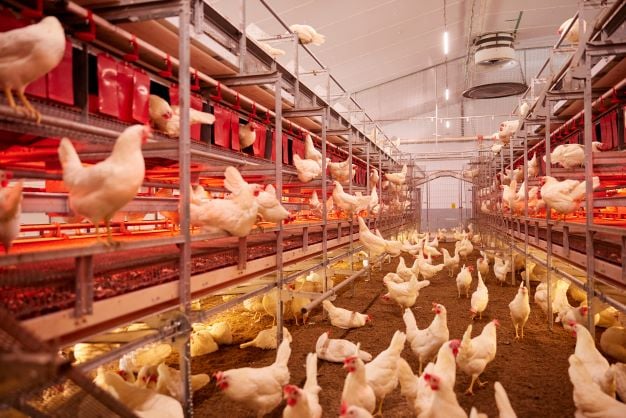
This article delves into how various lighting regimes impact the oviposition time (OT) and the quality of eggs in laying hens. Key findings include:
-
Lighting Influence on Oviposition Time: Standard 24-hour light-dark cycles influence egg laying predominantly during the light phase. However, asymmetric intermittent lighting results in egg laying during the “subjective day” as perceived by the hens.
-
Egg Quality and Oviposition Time: The study demonstrates that eggs laid in the morning tend to have higher weight, stronger shells, and higher calcium content compared to eggs laid later in the day. The timing of oviposition also affects the cholesterol content of the egg, with morning eggs containing significantly less cholesterol.
-
Lighting Regimes and Performance: Shorter light periods can lead to earlier laying times, while extended dark phases tend to shift egg-laying times closer to “sunset,” thus influencing overall egg production and quality.
Detailed Insights
What are lighting regimes and how do they affect laying hens?
Lighting regimes refer to the duration and pattern of light exposure provided to hens. Studies have shown that light not only regulates the circadian rhythm but also controls the timing of ovulation and egg laying. Different lighting schedules, including continuous light or alternating dark and light phases, influence the time at which hens lay eggs, with consequences on egg quality and production.
How does oviposition time impact egg quality?
The timing of oviposition plays a significant role in egg quality. Eggs laid early in the day generally have a higher mass and better shell quality. Specifically, the eggs laid in the morning were found to have more intense brown eggshell pigmentation, greater shell thickness, and higher calcium content. In contrast, eggs laid in the afternoon tend to have higher levels of phosphorus and magnesium in the yolk and higher cholesterol content.
What effect does lighting have on egg production?
Lighting regimes can alter egg-laying cycles, with certain patterns improving egg production efficiency. For example, increasing the length of the light phase or adjusting the timing of light transitions (such as the “sunrise” and “sunset” periods) has been shown to shift oviposition times, ultimately influencing the timing of egg collection and its quality.
FAQ
1. How does lighting schedule impact egg production?
Different lighting schedules, especially intermittent or asymmetric lighting, can shift the timing of egg laying, often affecting the synchronization of egg production within the flock.
2. What time of day are eggs of better quality?
Eggs laid in the early morning typically have better quality, including higher mass, stronger shells, and more calcium content compared to those laid later in the day.
3. Does oviposition time affect egg shell quality?
Yes, eggs laid in the morning tend to have thicker shells compared to those laid later in the day, possibly due to the extended time they spend in the oviduct during the formation process.
4. Can adjusting light cycles improve egg quality?
Yes, optimizing lighting schedules, especially by adjusting light and dark phases, can influence the timing of egg laying, which in turn affects the overall quality of the eggs.
Conclusion
Lighting regimes play a crucial role in regulating oviposition time, egg quality, and productivity in laying hens. By manipulating the light-dark cycle, farmers can optimize egg-laying patterns, improve egg quality, and increase productivity. This review underscores the importance of understanding and managing light exposure in poultry farming to enhance both the quantity and quality of eggs produced.
Deep Learning in Precision Cattle Farming: How AI Is Transforming Livestock Management