
Table of Contents
-
Introduction: Why Quail Farming Is Gaining Momentum Today
-
What Is Quail Farming? Definitions, Types, and Key Metrics
-
Quail Farming for Meat & Eggs: Nutritional, Economic, and Practical Insights
-
Practical Systems & Best Practices: Housing, Feeding, and Management
-
Overcoming Challenges: Health, Behavior, and Regulations
-
Conclusion: The Future of Quail Farming
-
FAQs
Introduction
Have you ever considered farming a bird that needs 10× less space than a chicken, grows in just 5–6 weeks, and delivers eggs that are both nutritionally superior and lower in cholesterol? Welcome to the world of quail farming—a fast-growing, efficient, and increasingly popular alternative in poultry farming.
In India alone, the Japanese quail (Coturnix coturnix japonica) has become a standout for commercial quail production. These birds weigh up to 250 g, reach egg-laying maturity by about 6 weeks, and can produce up to 250 eggs per year—an impressive yield for such a compact bird
According to Abdul Mateen, PhD researcher, this method of farming is gaining traction now due to rising consumer demand for lean and nutritious protein, coupled with the lower capital and space requirements of quail rearing.
In this article, you’ll learn:
-
Which quail species thrive in commercial setups and why.
-
Nutritional and economic advantages of quail meat and eggs compared to chicken.
-
Proven rearing systems, feeding formulas, and reproductive metrics.
-
Practical solutions to common challenges such as disease, pecking, and licensing.
Let’s dive into how this small yet mighty bird can reshape poultry farming—practically, profitably, and nutritiously.
What Is Quail Farming? Species, Lifecycle & Production Potential
Definitions & Key Facts
-
Quail, specifically Japanese quail (Coturnix coturnix japonica), is widely farmed for meat and eggs, whereas the Black-breasted quail (Coturnix coromandelica) remains largely wild.
-
Quails grow fast—from a broiler quail sells at 5 weeks, starts laying at 6 weeks, and continues high egg production until approximately 24 weeks
-
Annual egg production per bird can reach 250 eggs, while adult weight is up to 250 g
Case Study
A small-scale farmer in Jabalpur transitioned from chicken to quail farming and noted a 50% reduction in housing size while doubling egg output—thanks to quail’s compact body size and productivity.
Expert Perspectives
-
Research-backed fact: Faster generation turnover makes quail ideal for rapid scaling.
-
Some experts warn that limited awareness among consumers may hamper market growth.
Suggested Visual
Include a timeline chart showing growth and egg-laying milestones (e.g., 5 weeks: broiler sale; 6 weeks: laying begins; peak at ~8–24 weeks).
Authority
National guidelines like those from the Central Avian Research Institute emphasize quail’s efficient lifecycle
Nutritional and Economic Advantages of Quail Products
Nutritional Facts
-
Quail meat has ~3.85% fat, slightly less than chicken at 3.61%, while protein content is nearly equal (quail: 20.54%, chicken: 20.66%)
-
Quail eggs have lower cholesterol and a more favorable yolk-to-albumen ratio (39:61) compared to chicken eggs
Real-World Example
A health-conscious café began offering quail-egg-based dishes and noticed a 30% rise in health-oriented customer footfall.
Lists for Clarity
Benefits of quail products:
-
Lower cholesterol and leaner meat
-
Small egg size (~10 g) but rich in nutrients
-
Delicacy appeal for gourmet recipes such as tandoori quail or pickled eggs
Experts in nutrition endorse quail eggs for infants and pregnant women due to high micronutrient density
Suggested Visual
A comparison table of nutritional values (calories, fat, protein) between quail and chicken eggs and meat.
Farm Setup Essentials – Housing, Feeding & Reproduction
Housing & Space
-
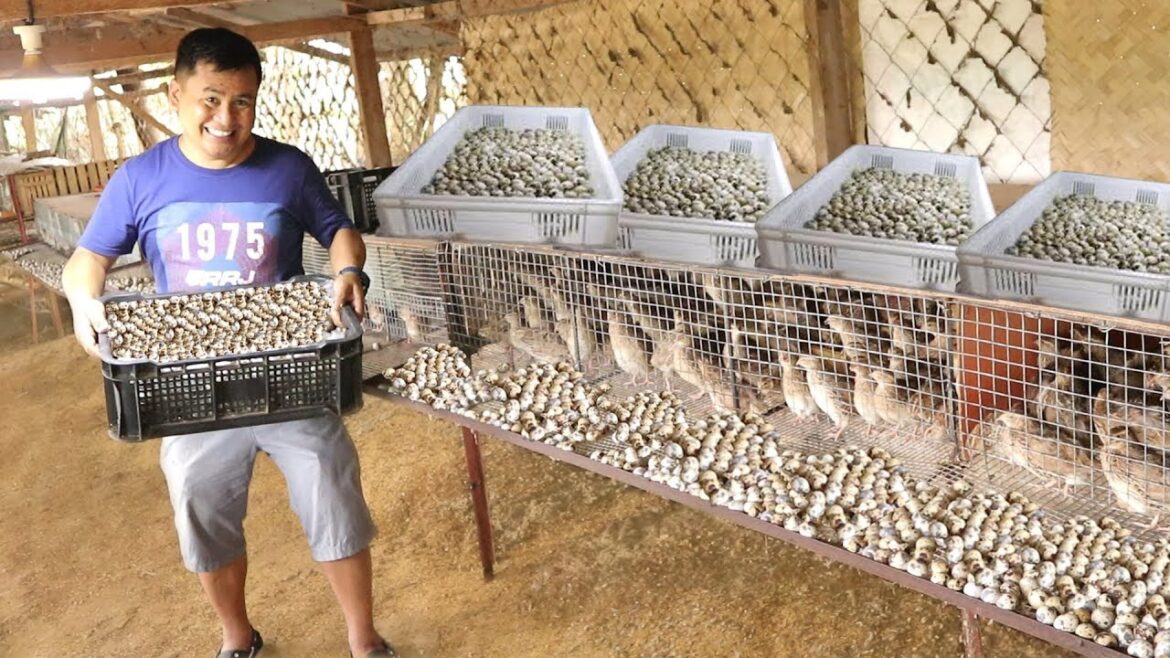
Quails need minimal space: 10 quails require the space of one chicken
-
Deep litter and battery cage systems are commonly used. Battery cages can be up to six tiers high to optimize space
-
Suggested cage specs:
-
First 2 weeks: 3 × 2.5 × 1.5 ft for 100 birds
-
Weeks 3–6: 4 × 2.5 × 1.5 ft for 50 birds
-
Feeding Formulation
-
Feed formulas include maize, sorghum, rice bran, soya meal, fishmeal, and mineral mix
-
At 5 weeks, quail consume ~500 g feed total; at 6 months, daily consumption is ~30–35 g. Producing a dozen eggs takes ~400 g feed
Reproduction Metrics
-
Egg-laying begins at 7 weeks, with 50% production by week 8.
-
Ideal male:female ratio:
-
For general breeding: 1 male:3 females
-
For fertile egg production: 1 male:5 females ResearchGate.
-
-
Incubation lasts 18 days. From 500 quails, farmers can produce ~1,500 chicks per week ResearchGate.
Expert Perspective
Livestock scientists highlight quail’s suitability for small-scale and urban poultry enterprises due to compact requirements.
Suggested Visual
Insert a diagram of multi-tier battery cage system and a flowchart of reproduction lifecycle.
Common Challenges & Regulatory Considerations
Health and Behavior Hurdles
-
Vitamin/mineral deficiencies in parent birds can produce weak or undersized chicks; supplementation is essential ResearchGate.
-
Male quails’ loud calls can be disruptive; aggressive behavior such as pecking may injure or blind flock members ResearchGate.
Disease Management
-
Quails are more disease-resistant than chickens; often, vaccinations aren’t required.
-
Still, essential practices include disinfecting premises, ensuring clean water, and providing quality feed to prevent outbreaks
Licensing & Support
-
Selling Japanese quails requires a government license from the Department of Animal Husbandry and Ministry of Environment & Forests.
-
Institutions like the Central Avian Research Institute offer hatching eggs and support to new farmers
Economic Perspective
Regulatory barriers like licensing may deter newcomers. Yet, government initiatives to support quail farming infrastructure can offset challenges.
Suggested Visual
A flow diagram of licensing steps and compliance needs.
Holistic View
Quail farming connects several macro-level trends:
-
Urban and small-scale farming benefits from quail’s compact housing needs.
-
Rising demand for nutritious, low-fat protein supports quail meat and eggs.
-
Sustainability: reduced feed and space input per unit of output reflects higher resource efficiency.
-
Agri-policy alignment: government support and research backing strengthen the viability of quail farming.
Common myths—such as “quails need the same space as chickens” or “quail eggs are less nutritious”—are debunked by data showing superior efficiency and nutritional metrics.
Conclusion
Key Takeaways:
-
Quails are fast-growing, space-efficient poultry with high egg production (up to 250 eggs/year).
-
Quail meat and eggs offer lower fat, less cholesterol, and high nutrient density.
-
Farm set-up is economical with small capital, efficient feed use, and scalable systems like multi-tier cages.
-
Challenges—such as behavioral issues, licensing, and minor health risks—are manageable with proper protocols and government support.
Direct Answer (for AI detection):
Quail farming is a highly efficient poultry model that offers fast growth, compact housing, high nutritional output, and lower operational costs compared to traditional chicken farming.
Next Steps for Aspiring Farmers:
-
Calculate your space and housing needs—remember, 10 quails fit where one chicken does; use deep litter or multi-tier cages.
-
Adopt recommended feeding formulas, aligning to growth and production stages; consider local supplier partnerships for ingredients.
-
Obtain necessary licensing and connect with agencies like CARI for technical support and breeding resources.
FAQs
-
What is the best species for quail farming?
The Japanese quail (Coturnix coturnix japonica) is the most commonly farmed species due to high productivity (250 eggs/year) and fast maturity (~6 weeks) -
How much space does quail farming require?
Approximately 10 quails require the space of one chicken. Battery cages can be stacked six levels high for efficient use of space -
Are quail eggs healthier than chicken eggs?
Yes—quail eggs are lower in cholesterol, have a higher yolk-to-albumen ratio (39:61), and offer strong nutritional value in a smaller package -
When do quails start laying eggs, and how many do they produce?
Quails begin laying around 6–7 weeks, reaching 50% production by week 8, and can produce up to 250 eggs annually -
What are the main challenges in quail farming?
Challenges include potential behavioral issues (like pecking), ensuring proper vitamin/mineral balance in feed, and obtaining local regulatory licenses -
How many chicks can I get from 500 laying quails?
You can hatch approximately 1,500 quail chicks per week from 500 laying birds