
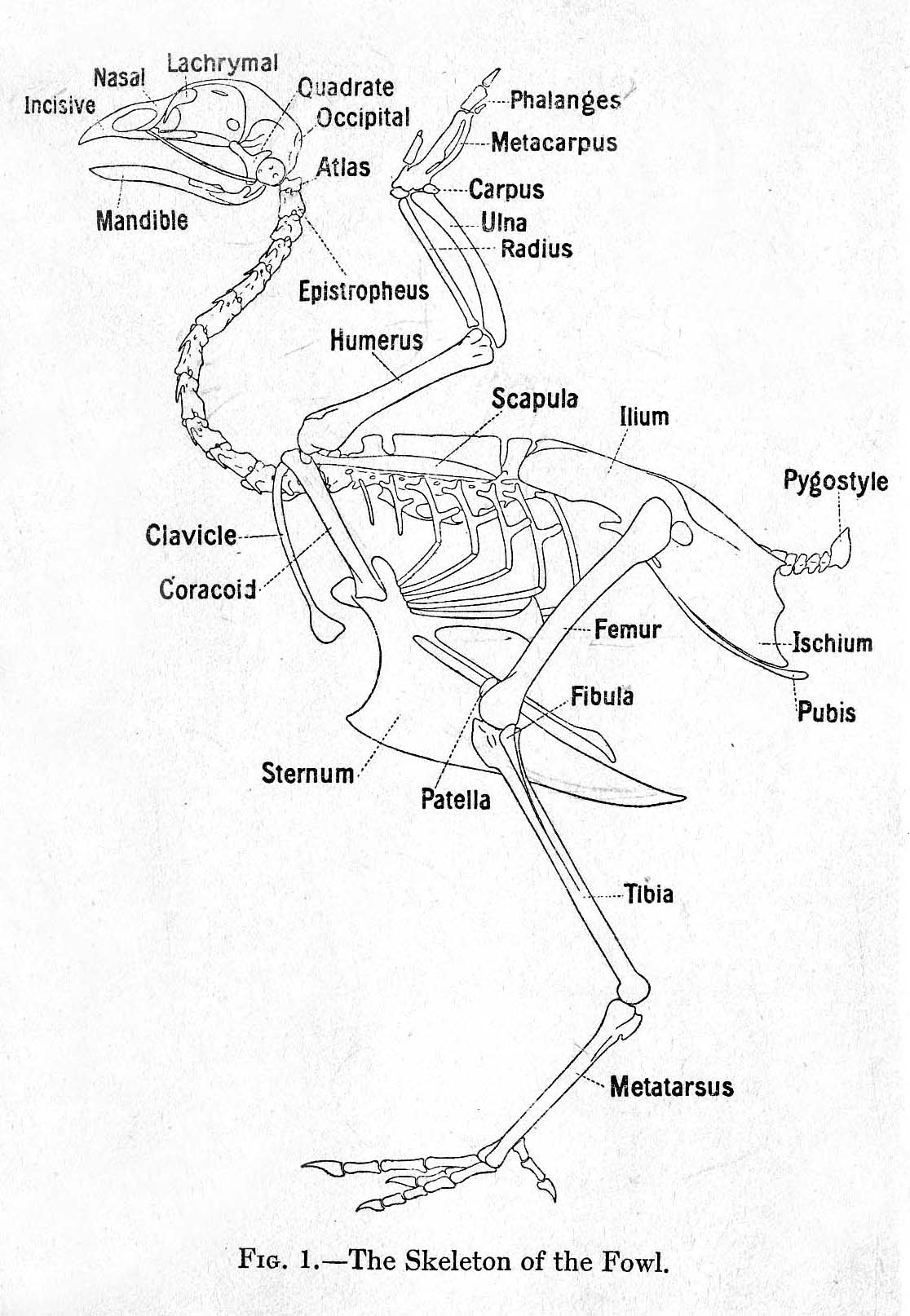
Did you know a chicken’s skeleton is a marvel of engineering? It’s a perfect blend of lightness and strength, crafted by evolution to support flight, efficient movement, and protection—all while remaining incredibly lightweight. Let’s explore how the chicken’s skeletal structure does so much with so little.
Why the Chicken Skeleton Matters
The skeletal system is the body’s frame, supporting organs and enabling movement. In chickens, though flight isn’t as dominant as in other birds, their bones still reflect evolutionary adaptations for lightness and structural strength
These adaptations are vital for:
- Flight capability (even if limited in domestic breeds),
- Protection of internal organs,
- Energetic efficiency during movement and balance.
Key Adaptations in the Chicken’s Skeleton
- Pneumatic Bones
Many chicken bones are pneumatized—hollowed out and connected to the respiratory system’s air sacs. This design reduces weight while keeping bones strong - Fused Vertebrae
The backbone includes several fused vertebrae:- Cervical regions provide flexibility,
- Thoracic to sacral vertebrae are fused for rigidity,
- The pygostyle (fused tail bones) supports tail feathers
- Keel-Shaped Sternum
A prominent keel (sternum) offers an expansive surface for flight muscle attachment—essential even for the short bursts of wing flapping that chickens still perform - Uncinate Processes
These bony protrusions overlap adjacent ribs, reinforcing the rib cage and supporting the respiratory system’s mechanics - Streamlined Head and Neck
Reduced skull size minimizes weight, and their long, flexibly segmented neck prevents head jarring and supports feeding behaviors
🦴 Anatomy Breakdown
Vertebral Column
- Cervical vertebrae (C13): Provide mobility and shock absorption, especially useful for pecking and landing
- Thoracic (T7) & Lumbar/Sacral (L+S14): Fused together to form a rigid support structure for movement and flight
Shoulder Girdle & Wings
- Scapula, Coracoid & Clavicle: Form the pectoral girdle; the coracoid connects to the keel, providing leverage for wing movement
- Humerus, Radius, Ulna, Carpals, Metacarpals: Compose the wing’s lightweight framework.
Pelvic Girdle & Legs
- Pelvic bones (fused innominate bones): Support body weight and allow egg-laying
- Femur, Tibiotarsus, Fibula, Tarsometatarsus: Constitute the leg, offering leverage and strength for walking and perching
🧬 Bone Composition & Formation
Chicken bones contain living tissue with collagen fibers, calcium, and phosphorus (as hydroxyapatite), and adapt structurally to stress. Pneumatic openings also link bones to air sacs, aiding both respiration and skeleton lightening.
🛡️ Functional Roles Beyond Support
- Protection: Fused vertebrae and rib structures guard the spinal cord and internal organs.
- Flight Efficiency: The lightweight yet strong frame aids flying—even if domesticated chickens fly only short distances.
- Respiration: Hollow bones balance weight and act as air reservoirs, enhancing breathing and wing flapping strength.
🐓 What This Means for Backyard Keepers
- Handling care: Support birds gently; avoid spine stress.
- Health monitoring: Watch for fractures from falls or trauma.
- Breed selection: Chickens meant for flight may display more pronounced skeletal features like taller keels.
🔭 Looking Ahead: Evolutionary Insights
The chicken skeleton is a living testament to its evolutionary past—traits like pneumatic bones and fused pelvises link back to dinosaurs. Even though domestic chickens aren’t top fliers, their bones carry the legacy of avian locomotion