
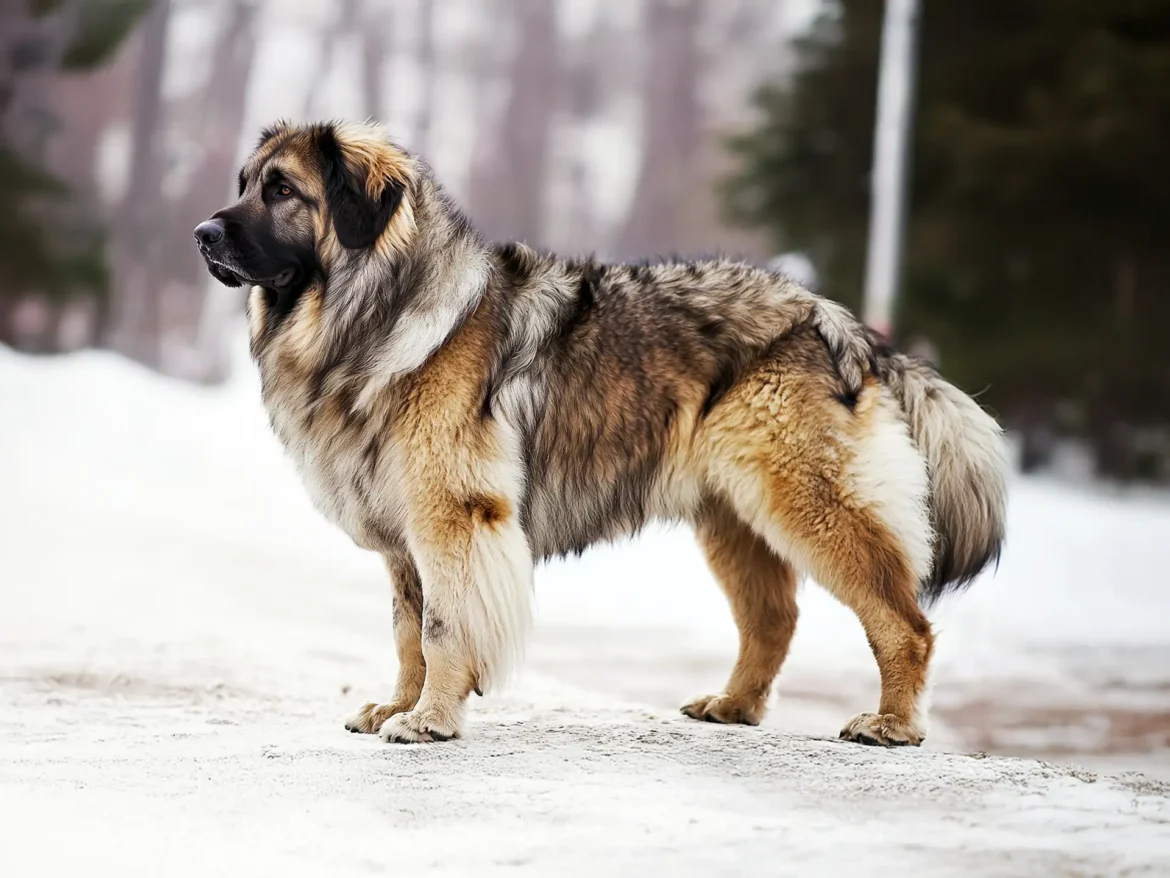
Caucasian Shepherd Quick Facts (caucasian dog)
🔹 Origin: Caucasus Mountains (2,000+ years old)
🔹 Size: Giant (100–220+ lbs)
🔹 Coat: Long, thick double coat
🔹 Colors: White, gray, fawn, brindle, piebald
🔹 Temperament: Fearless, dominant, intensely loyal
🔹 Lifespan: 10–12 years
🔹 Price: $1,500–$6,000
The Caucasian Shepherd: A Living Fortress
For over two millennia, the Caucasian Shepherd Dog (CSD) has stood as an immovable force in the harsh terrain between the Black and Caspian Seas. Bred by ancient shepherds to defend flocks against wolves, bears, and human thieves, these colossal canines possess a genetic blueprint forged in relentless natural selection. Unlike modern breeds shaped by kennel clubs, the CSD evolved through survival of the fittest—only the most intelligent, strongest, and most aggressive pups survived to pass on their traits. Soviet-era breeding programs further refined them as border patrol dogs, capitalizing on their territorial instincts and ability to work in -30°F temperatures. Today, they’re national treasures in Georgia, Armenia, and Azerbaijan, where they’re still used to guard remote farms. Their psychology reflects this heritage: they don’t just bark at intruders; they assess threats silently before launching devastating attacks if necessary. A 2021 study in the Journal of Canine Genetics found CSDs have the highest pain tolerance of any breed—a trait honed by battling predators. Yet with their family, they show surprising tenderness, often “adopting” livestock or children as part of their protected pack. Their metabolism is equally remarkable: they thrive on 25% fewer calories than dogs of similar size, a legacy of surviving scarce mountain winters.
Body Structure & Nutritional Needs of a Giant
The Caucasian Shepherd’s anatomy is optimized for power and endurance. Males typically stand 28–35 inches at the shoulder, with bone density 15% greater than other giant breeds like Great Danes—a feature visible in their bear-like paws and thick tails. Their massive heads house jaw muscles capable of exerting 450 PSI (compared to a German Shepherd’s 238 PSI), while a unique double dewlap (neck skin fold) protects vital arteries in fights. Their long, coarse outer coat and woolly undercoat provide insulation against both subzero cold and summer heat, though they shed explosively twice yearly. Unlike Western breeds, CSDs mature slowly—they aren’t fully physically or mentally mature until age 3, requiring careful diet management during growth.
Nutritionally, these dogs defy expectations: despite their size, they’re prone to obesity if overfed. A study by the European Journal of Companion Animal Nutrition found CSDs fed high-protein (26%+), low-carb diets had 40% fewer joint issues. Raw feeding is popular among breeders, but quality kibble with glucosamine supplements also works. Portion control is critical—puppies should eat 3–4 small meals daily to prevent bloat, while adults do best with 2 meals totaling 8–10 cups of food (less than a Great Dane). Their slow metabolism means they burn calories efficiently, but they require precise calcium/phosphorus ratios to avoid developmental dysplasia.
Caucasian Shepherd Personality & Temperament
1. Guardian Instincts (Not a Pet—a Protector)
-
Territorial to the extreme – Views entire property as “theirs”
-
Silent assessors – Rarely bark unless threat is confirmed
-
Unpredictable aggression – May attack without warning if provoked
2. Social Structure & Compatibility
| With… | Rating (★/5) | Notes |
|---|---|---|
| Owners | ★★★★★ | Fiercely loyal to 1–2 people |
| Children | ★★☆ | Only if raised together; may herd/knock over |
| Other Dogs | ★☆ | High same-sex aggression |
| Strangers | ☆ | Will block/attack unfamiliar guests |
3. Energy & Intelligence
-
Low exercise needs – 45 mins/day walking is sufficient
-
Problem-solvers – Will bypass fences if understimulated
Caucasian Shepherd Appearance Standards
Coat & Colors
-
Double coat: 2–6″ long outer hairs + dense undercoat
-
Common patterns: Solid, spotted, or piebald
Distinctive Features
-
Bear-like head with deep muzzle wrinkles
-
Oval, dark eyes set wide apart
-
High-set, cropped (or natural) ears
Size Variations
| Type | Height | Weight |
|---|---|---|
| Mountain | 28–35″ | 140–220+ lbs |
| Steppe | 25–28″ | 100–140 lbs |
Caucasian Shepherd Care Guide
1. Grooming Demands
-
Daily brushing during shedding seasons
-
Paw fur trimming to prevent ice balls
2. Health Risks
-
Hip/elbow dysplasia (OFAA testing mandatory)
-
Bloat (GDV) – Elevated feeders help
-
Heart issues – Annual echocardiograms advised
3. Space & Security
-
Minimum 1/2 acre fenced yard
-
6’+ fences (they can climb lower ones)
Caucasian Shepherd FAQs
1. Can Caucasian Shepherds be family pets?
⚠️ Only for experts – Their size/aggression make them dangerous if untrained.
2. How much does a Caucasian Shepherd eat daily?
🍗 8–10 cups of large-breed formula (split into 2 meals).
3. Are they banned anywhere?
🚫 Yes – Prohibited in Denmark and some US housing.
4. CSD vs. Tibetan Mastiff?
| Trait | CSD | Tibetan Mastiff |
|---|---|---|
| Origin | Caucasus | Himalayas |
| Temperament | More aggressive | More aloof |
| Cold Tolerance | Extreme | Extreme |
Ownership Fit
Best For:
✔ Experienced working dog handlers
✔ Rural properties needing livestock protection
✔ Owners wanting a 24/7 security system
Not Ideal For:
❌ First-time dog owners
❌ Urban/suburban homes
❌ Families with small children
#CaucasianShepherd #GiantDogs #LivestockGuardians #ProtectiveBreeds #RuralDogs #ExtremeWeatherDogs
-
Most aggressive dog breeds in the world
-
Best dogs to protect against wolves
-
Giant breeds with longest lifespans
-
Caucasian Shepherd vs. Kangal
-
Rarest mastiff-type dogs
Final Verdict: The Caucasian Shepherd isn’t just a dog—it’s a 200-lb force of nature. Only consider this breed if you can provide rigorous training, vast space, and accept their potentially lethal protective instincts.
The Ultimate Guide to Bombay Cats: Personality, Care & Facts